Low back pain
that won’t go away?
The problem could be in your muscles.
If you have chronic low back pain, you could be eligible for ReActiv8® – a restorative therapy that makes recovery possible* for those suffering from chronic low back pain.
*Based on results seen in the ReActiv8 B and RESTORE clinical studies.
Can't Wait to Learn More?
Check out these Resources.
Is your back pain mostly in your lower back?
Check out this breakdown of the ReActiv8 Restorative Neurostimulation procedure, therapy benefits and other medically reviewed information from the Cleveland Clinic.
ReActiv8 Procedure: What It Is, Side Effects & Recovery
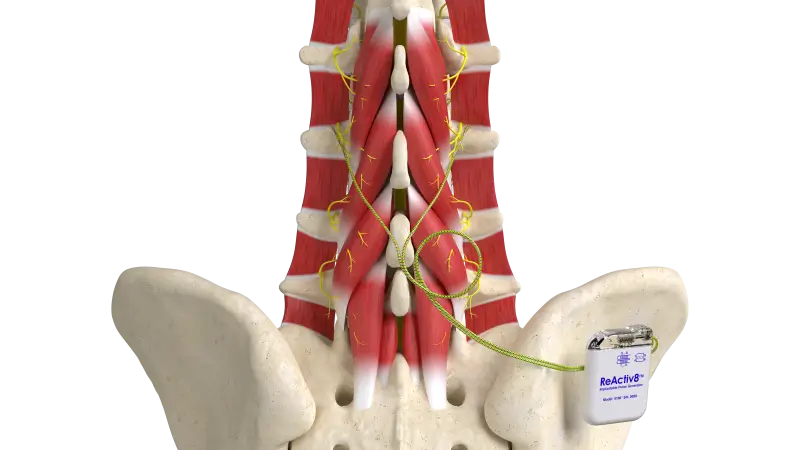
ReActiv8 Restorative Neurostimulation is a surgical implant designed to improve low back pain and function in patients with multifidus muscle dysfunction.
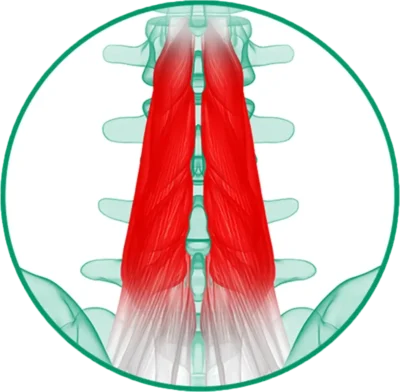
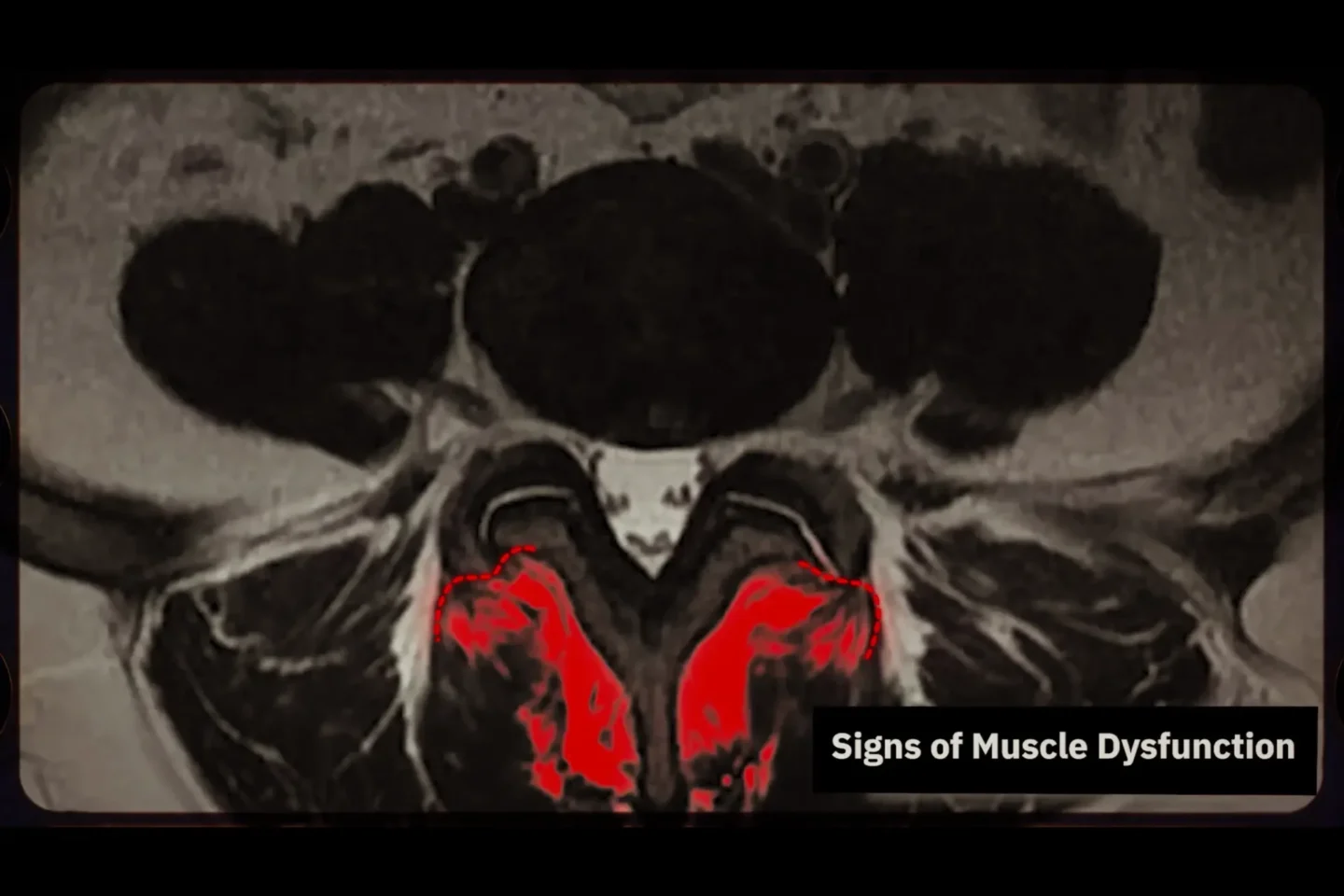
What is Multifidus Muscle Dysfunction?
Multifidus Dysfunction can result from a loss of neuromuscular control. This can cause a lack of spinal support, leading to uncontrolled loading of spinal joints and discs, resulting in mechanical low back pain.
Watch our low back pain patient education series to learn more about multifidus dysfunction, loss of neuromuscular control and the evaluation process for ReActiv8 with your healthcare provider.
Meet Our Real ReActiv8 Patient Success Stories
Robert’s Story
United States Air Force Veteran Robert Pfenning recounts his struggles with chronic low back pain since his days in the service and credits ReActiv8 with allowing him to take his wife on their dream trip to Germany. Dr. Robert Heros discusses Robert’s treatment journey.
Mack’s Story
ReActiv8 Patient Mack tells the story of his journey with low back pain through his time in the US Navy and after getting injured at his job doing deliveries. Dr. Justin Bundy explains how Mack was able to recover from his back pain with ReActiv8 Restorative Neurostimulation.
Rachel’s story
Follow real ReActiv8 Patient, Rachel, through her chronic low back pain recovery journey at one year and again three years later. We find her getting back to some of her passions she never thought she would do again, including horse riding, and working extra hours as a nurse.
Kate’s Story
ReActiv8 Patient Kate recounts her struggles with chronic low back pain as a London police officer and how ReActiv8 therapy got her out of pain and allowed her to complete a marathon.
Grant’s Story
ReActiv8 Patient Grant had debilitating chronic low back pain after a parachuting accident. Follow him through training and competing in an iron-man triathlon.
William’s Story
William credits ReActiv8 with the resolution of his debilitating chronic low back pain. Follow him to his job as a traveling tailor and through the woods on a long distance bike ride.
Patient Highlights: Abner, Curtis and Roseanne
Our patient ambassadors from the ReActiv8 RESTORE clinical study discuss their experiences with chronic low back pain and their results with ReActiv8.
Connect with a Clinical Specialist
Gilligan et al. Five-Year Longitudinal Follow-up of Restorative Neurostimulation Demonstrates Durability of Effectiveness in Patients with Refractory Chronic Low Back Pain associated with Multifidus Muscle Dysfunction. https://doi.org/10.1016/j.neurom.2024.01.006
Schwab, F., Mekhail, N., Patel, K.V.et al. Restorative Neurostimulation Therapy Compared to Optimal Medical Management: A Randomized Evaluation (RESTORE) for the Treatment of Chronic Mechanical Low Back Pain due to Multifidus Dysfunction.Pain Ther(2025). https://doi.org/10.1007/s40122-024-00689-0
The ReActiv8 system showed a strong safety record in the ReActiv8-B clinical trial involving 204 patients. In the first 4 months after the device was implanted, only 8 serious side effects related to the device or procedure were reported—just 4% of all events. Importantly, there were no unexpected serious issues and no cases of the device’s leads moving out of place. Over a 5-year follow-up period, 56% of participants experienced at least one side effect related to the device or procedure and 90% of these issues were resolved by the end of the study.
The RESTORE Trial followed 99 patients using the ReActiv8 system. During the first year, about 23% of patients experienced side effects related to the device, procedure, or therapy. Most of these issues were mild and 23 out of 31 were resolved within the year. Common side effects included mild pain at the implant site (8 patients), overstimulation of tissue (5 patients), lead fractures (3 patients), and fluid buildup or skin irritation at the implant site (2 patients each). Seven patients required additional procedures, including system removal (3 patients), lead adjustments (4 patients), and implant site revisions (2 procedures in 1 patient).
For more information on safety, efficacy, and risk, see https://mainstaymedical.com/safety/.